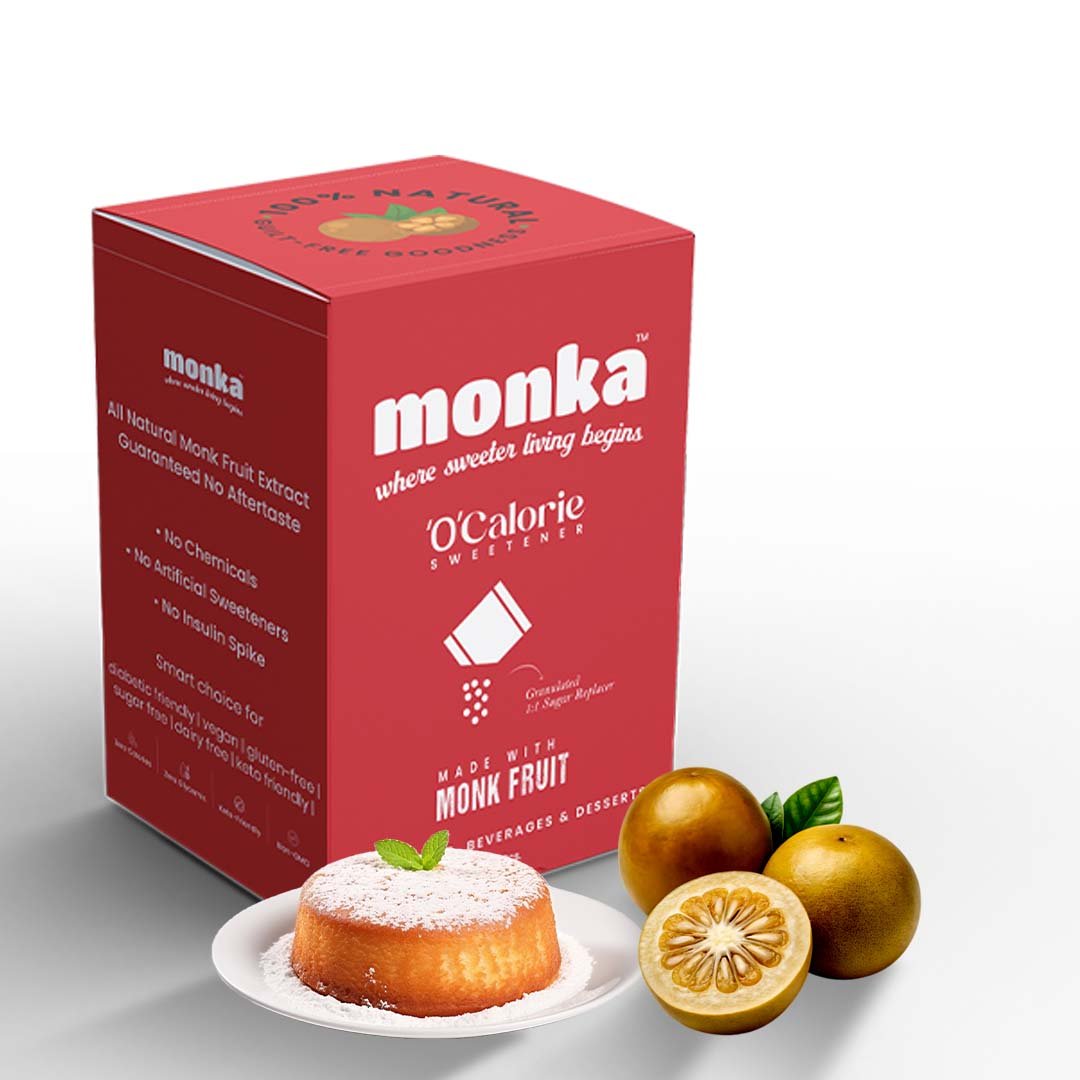





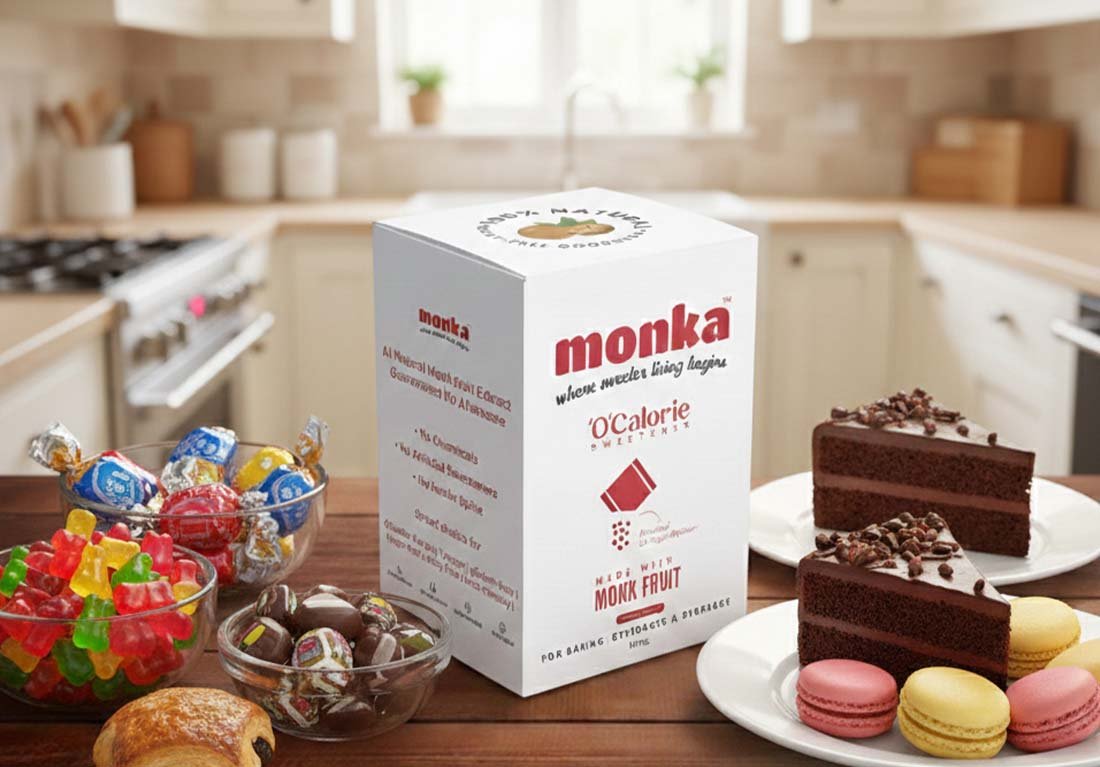
If you’ve ever tried to bake a cake with a standard sugar substitute, you’ve likely faced the “health-food heartbreak.” The cake doesn’t brown, the texture feels “off,” or there is a strange cooling sensation that ruins the flavor.
Traditional sweeteners like Stevia or Erythritol are great for sweetening tea, but they often fail in the oven. That is where Allulose changes the game. At Monka, we call Allulose the “Rare Sugar” revolution. But why is it scientifically superior? Let’s look under the hood of baking science to find out.
1. The Maillard Reaction: Why Allulose Browns
The biggest complaint about sugar-free baking is that treats come out looking pale and unappetizing. Traditional sugar undergoes the Maillard Reaction—a chemical reaction between amino acids and reducing sugars that gives browned food its distinctive flavor and golden color.
Most sweeteners (like Erythritol) are sugar alcohols and cannot undergo this reaction. Allulose is a rare sugar. It possesses the exact molecular structure needed to brown, caramelize, and create that beautiful golden crust on your cookies and breads. When you use Monka Allulose, your kitchen will actually smell like a real bakery.
2. Perfect Texture and “Mouthfeel”
Sugar does more than just sweeten; it provides bulk and moisture. Stevia is hundreds of times sweeter than sugar, meaning you only use a tiny pinch. This leaves your cakes flat and dry because you’ve lost the “bulk” of the sugar.
Because Monka Allulose is a 1:1 replacement, it provides the exact same volume as sugar. It draws in moisture (hygroscopy), ensuring your sponge cakes stay soft and your brownies remain fudgy for days, rather than turning into dry bricks by the next morning.
3. The End of the “Cooling Effect”
If you’ve used Erythritol, you’re familiar with the “cold” feeling on your tongue—similar to mint, but in a chocolate chip cookie. This is known as a “negative heat of solution.”
Allulose has a neutral heat of solution. It tastes exactly like cane sugar, with about 70-80% of the intensity. This means no weird sensations, no metallic finish, and no “aftertaste” that screams “diet food.” It simply lets the flavors of your premium vanilla, cocoa, and butter shine through.
Quick Baker’s Guide: Tips for Using Monka Allulose
- Watch the Oven: Because Allulose browns slightly faster than table sugar, we recommend lowering your oven temperature by 10°C to 15°C and baking for a few minutes longer.
- The 1:1 Rule: No math is needed. If your recipe calls for 100g of sugar, use 100g of Monka Allulose.
- Ice Cream Hero: Allulose is a miracle for homemade ice cream. It prevents ice crystals from forming, resulting in a scoop that is as soft and creamy as professional gelato.
The Bottom Line
Allulose bridges the gap between the “science of baking” and the “science of health.” It allows you to maintain the technical integrity of your favorite recipes while keeping your creations Zero Calorie and Zero Glycemic.
Whether you are a professional pastry chef or a weekend hobbyist, switching to Monka Allulose means you never have to choose between a perfect rise and a healthy life again.
Explore the Allulose Series